We turn conventional thermal power plants into intelligent hybrid matrices, leading the energy transition across Isolated Systems (SISO) with advanced technology and real sustainability.
In locations hours by boat from the nearest urban centre, availability is not secured by a field crew — it is secured by telemetry.
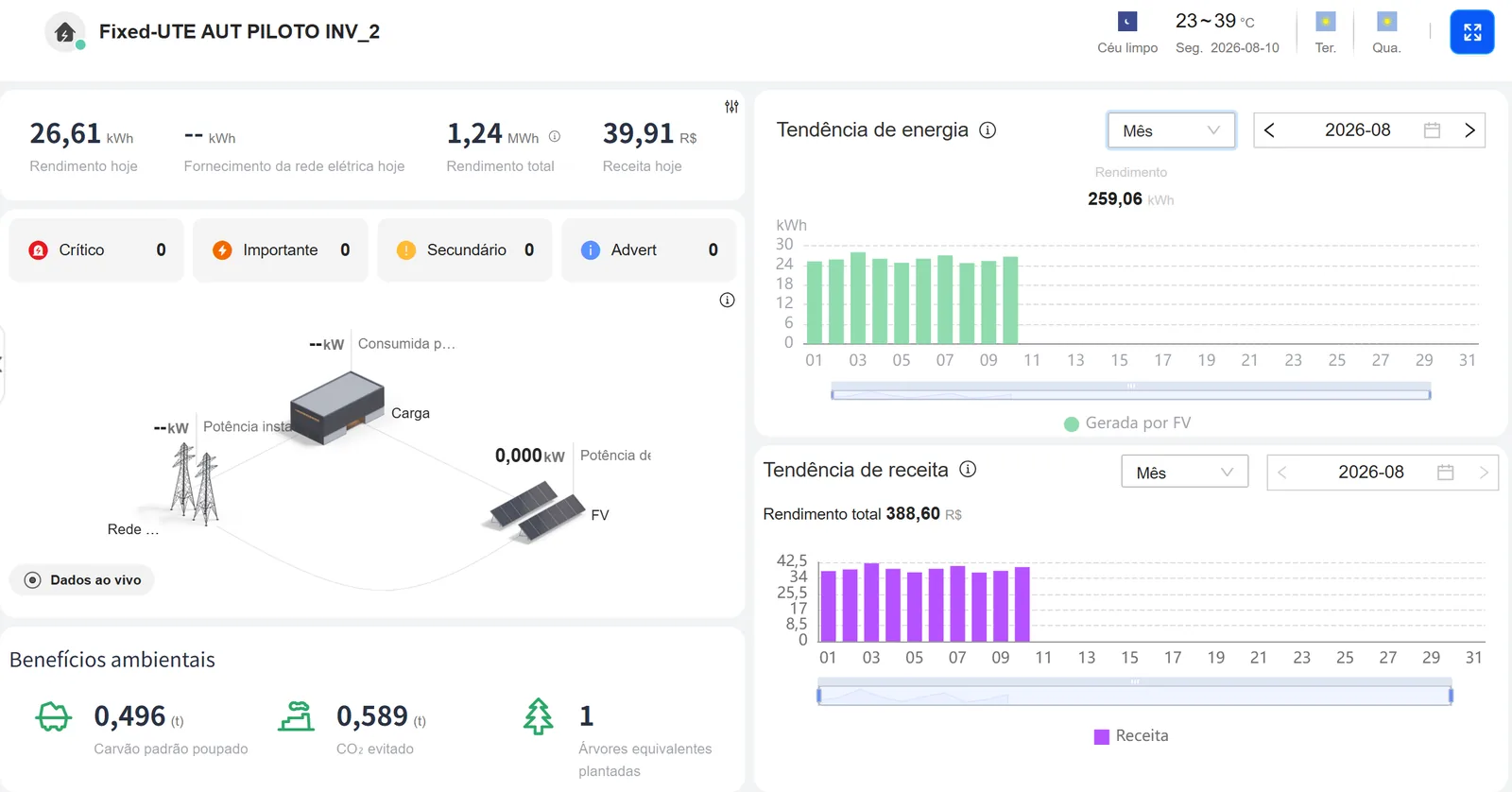
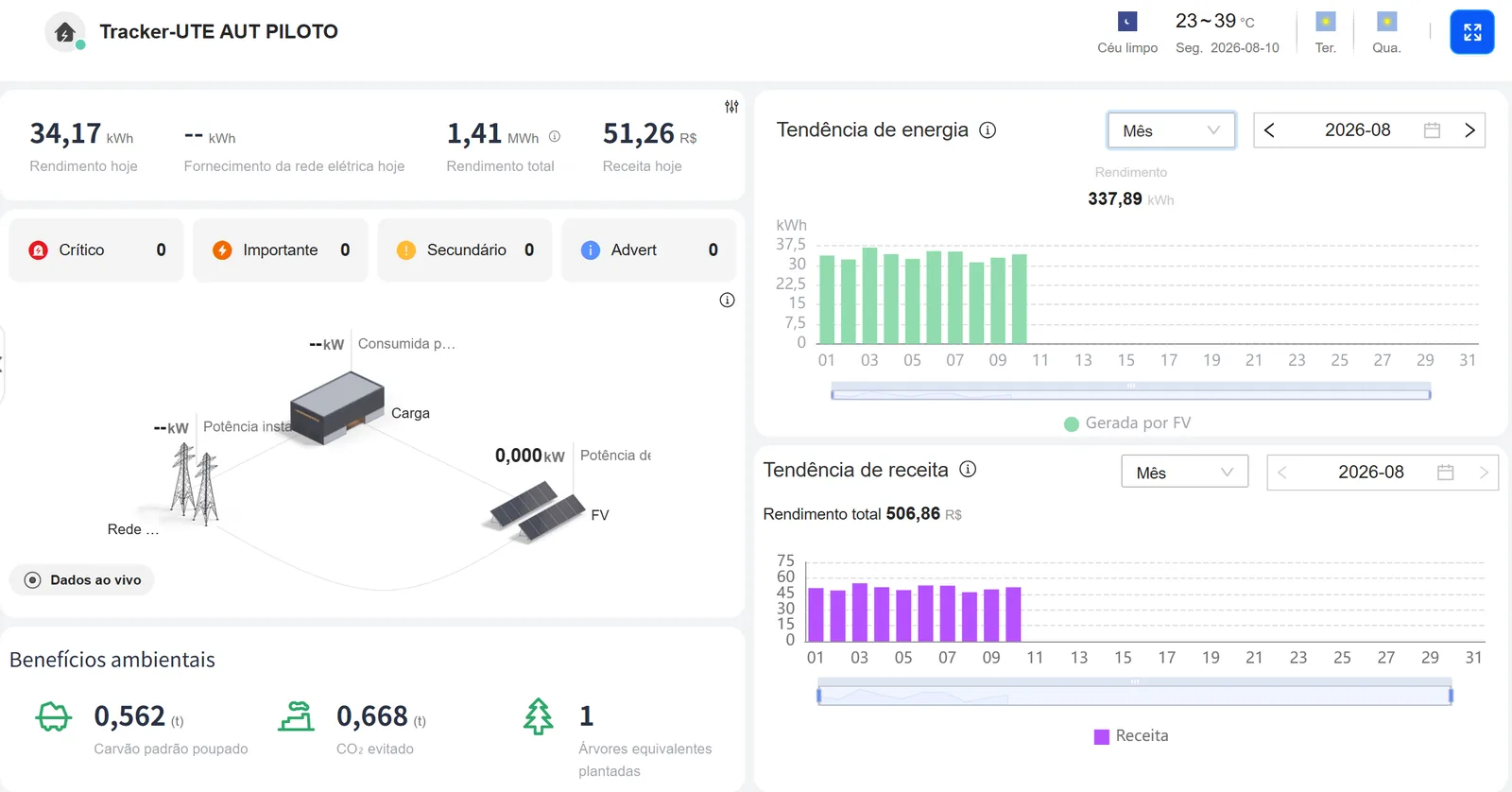
The platform reads current and voltage from every string individually. A soiled, shaded or degraded row shows up as a specific-yield deviation before it becomes a meaningful loss — with nobody walking the array.
Critical, major, minor and warning. Every event is classified and routed, and the team decides what warrants a trip and what can be solved remotely. Over the measured period, both pilot arrays logged zero alarms at every severity.

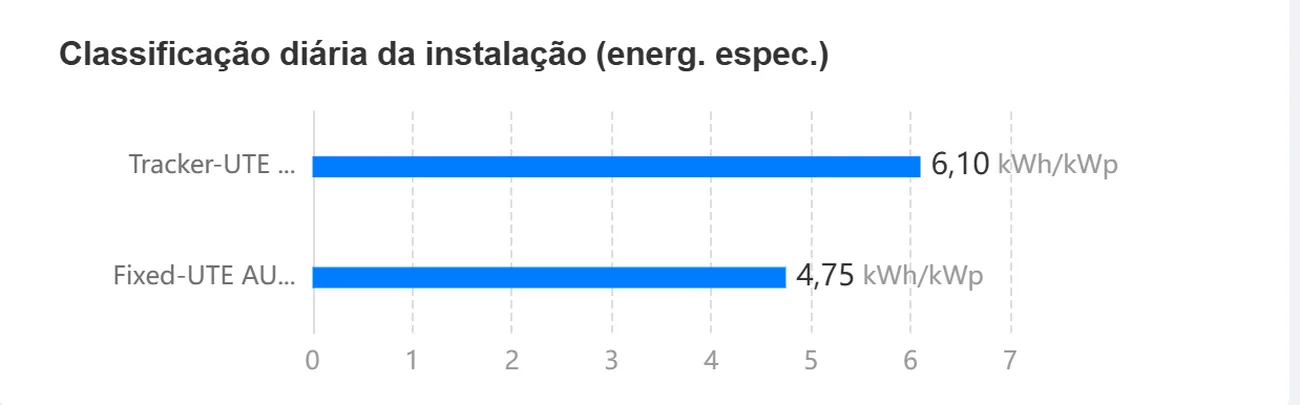
Raw kWh says nothing when arrays differ in size. Normalizing per installed kWp (kWh/kWp) makes arrays, sites and technologies comparable on the same basis — that is how the tracker gain was isolated.
Avoided CO₂, standard coal saved and tree equivalence are computed from energy actually metered, not from design estimates. That is what makes sustainability reporting traceable.
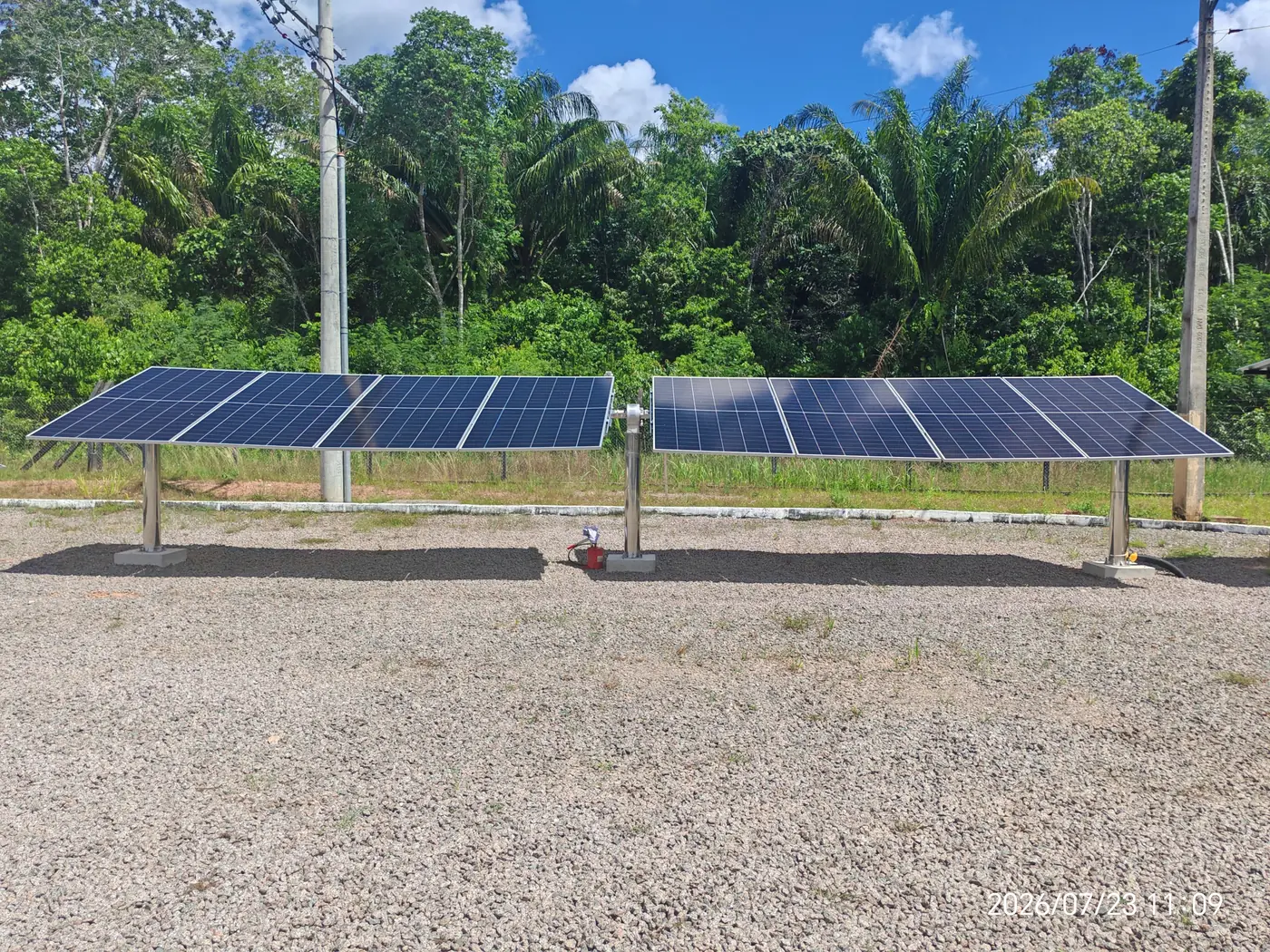
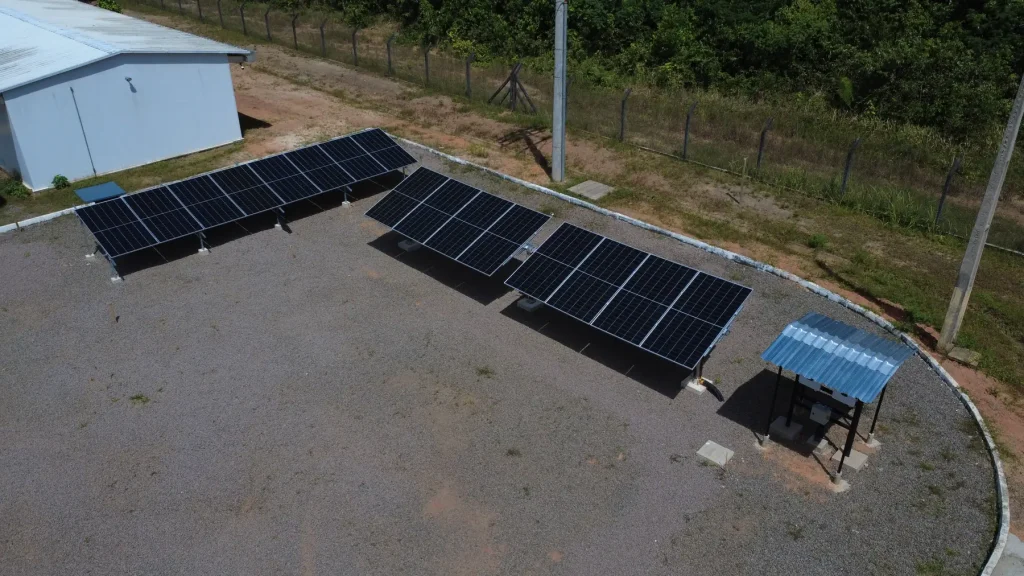
We installed two identical 5.6 kWp arrays side by side, under the same sky, to measure the real gain of solar tracking at Amazonian latitude.
Across 11 consecutive days of measurement, the tracker array generated 30.4% more energy than the fixed-tilt array — and converted that difference into 30.4% more revenue.
11:00 · 23 Jul 2026 — tracker close to horizontal
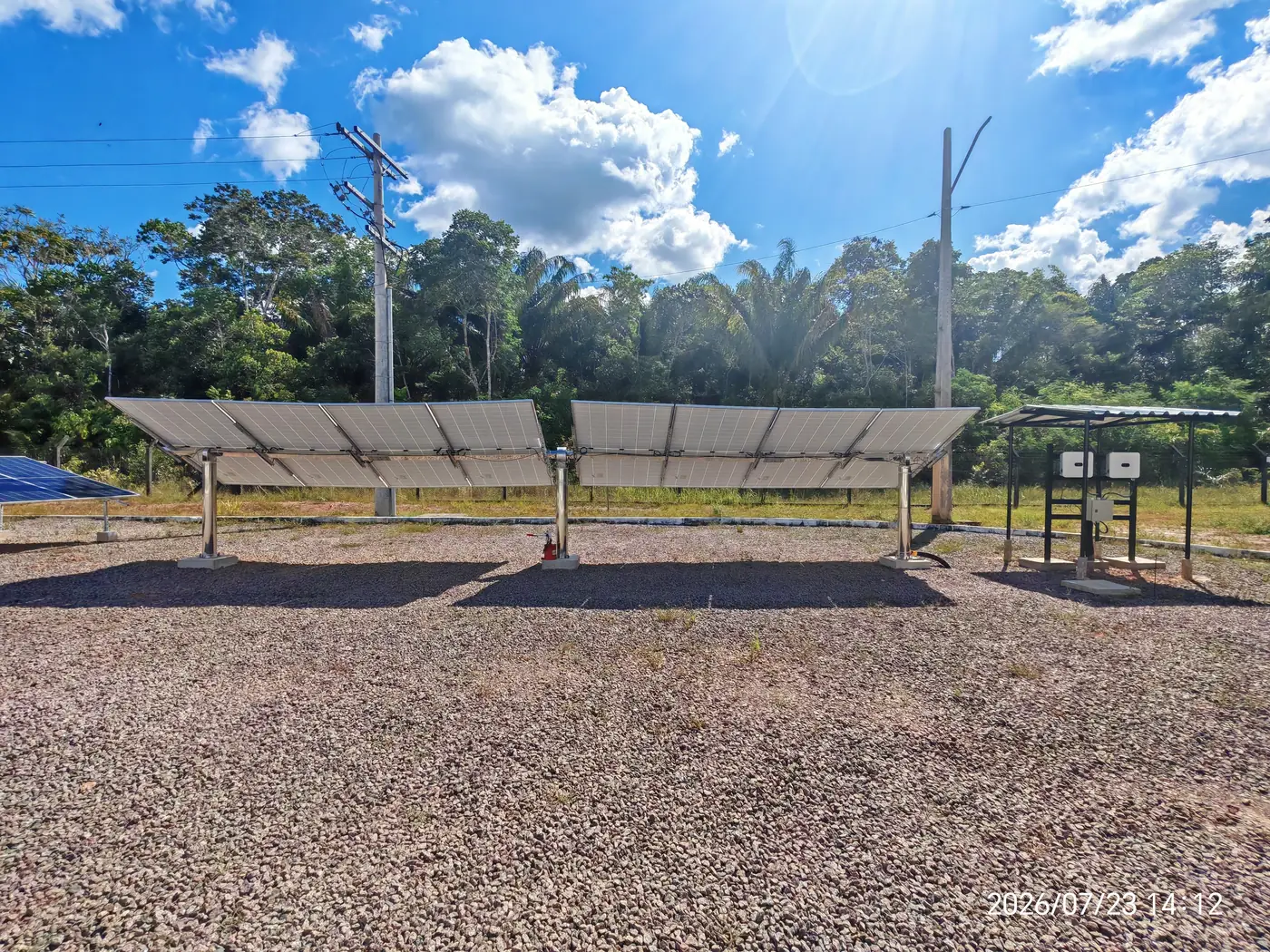
14:00 · 23 Jul 2026 — following the sun westward
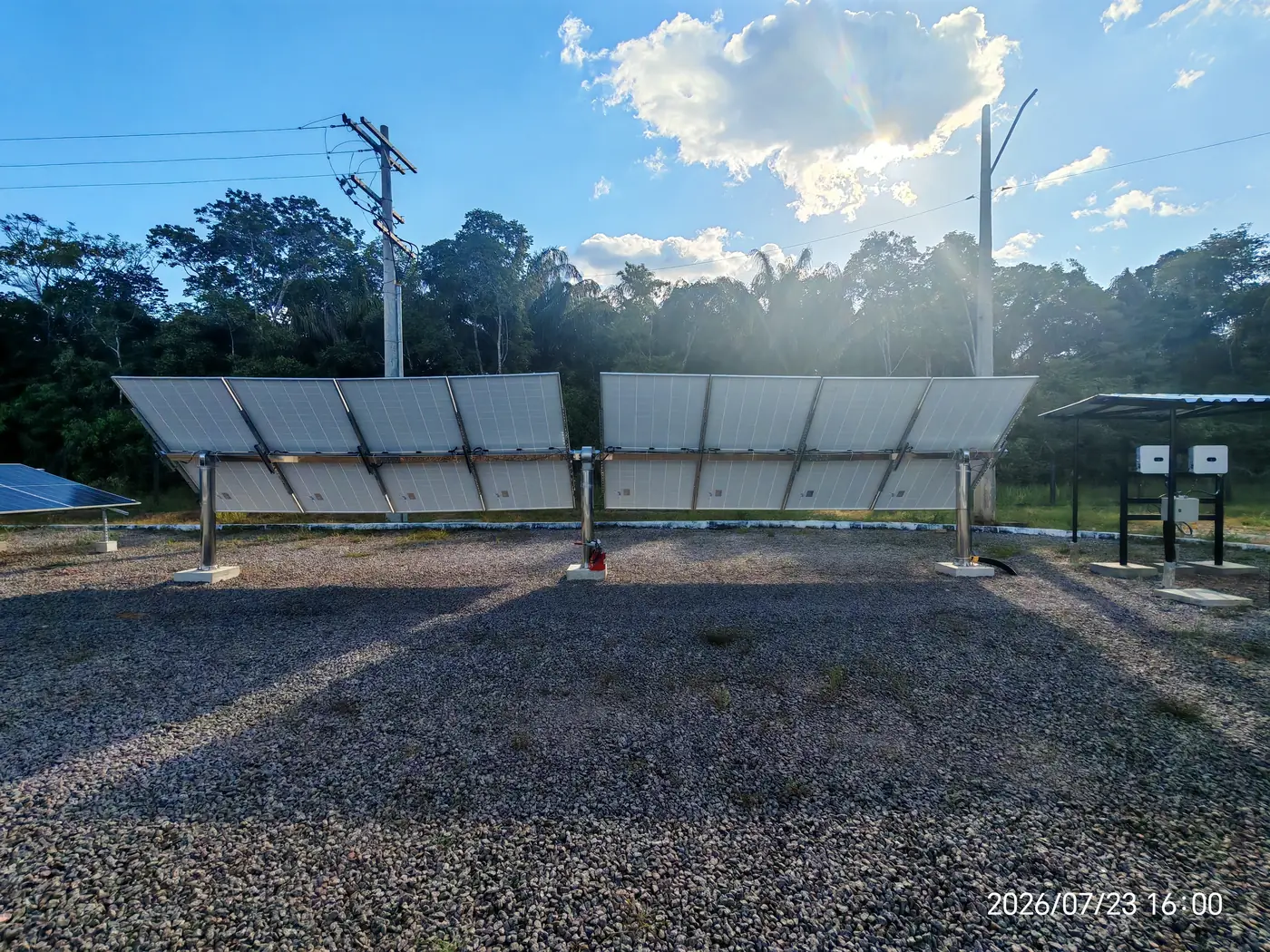
16:00 · 23 Jul 2026 — maximum tilt in late afternoon
Single-axis tracking delivered 28% more energy per installed kWp than the fixed-tilt array under identical irradiance and temperature conditions. In isolated systems, every percentage point of solar generation is diesel that does not have to travel up the river.
VP FlexGen Brazil designs, installs and operates hybrid photovoltaic systems in isolated communities across the Amazon. Each plant is a balance between high-complexity electrical engineering, river logistics and absolute respect for local biodiversity.
We operate where the conventional grid does not reach — replacing diesel gensets with clean solar power, without compromising supply stability.
The engineering that makes it possible to run renewable generation at grid-grade performance inside isolated systems.
Utility-scale batteries suffer from the barrel effect: a single weak cell drags down the performance of an entire block. Our architecture applies power electronics at string and pack level, treating each section independently. AI-assisted safety diagnostics anticipate thermal runaway and localized failures days in advance, cutting the Levelized Cost of Storage (LCOS) by around 20%.
Running hundreds of hectares in remote locations would demand a permanent field crew. The inverters execute multi-channel Maximum Power Point Tracking (MPPT) and Smart String Level Disconnection (SSLD) locally, while the AI cloud layer identifies broken strings and hardware anomalies remotely. Combined with self-cleaning and extreme-weather resilience, this turns island and riverside plants into self-optimizing power systems.
Technology, sustainability and reliable operation brought together in a single energy platform.
Seamless integration with existing diesel systems, prioritizing solar during irradiation hours.
Direct reduction in fuel consumption and in the Fuel Consumption Account (CCC).
Fossil sources replaced by clean energy, with auditable measurement of avoided CO₂.
Architecture already prepared for storage coupling at string and pack level.
Field-proven 28% gain per installed kWp at Amazonian latitude.
Less fuel carried along Amazon rivers, less risk of environmental accident.
Our engineering team assesses your project and designs the best hybrid architecture for your location in the Amazon.